
When looking to improve agricultural productivity, selecting the right organic fertilizer mixer is crucial. Organic fertilizers play a significant role in sustainable farming. They enhance soil quality and promote healthy plant growth. A reliable Organic Fertilizer Mixer can streamline the composting process. It ensures even distribution of nutrients, which is vital for plant health.
There are numerous options available in the market, making the decision challenging. It's essential to consider factors like capacity, durability, and ease of operation. Some mixers cater to smaller farms while others support large-scale operations. Each type has its pros and cons. Balancing between cost and quality is also necessary.
Farmers and producers need reliable equipment. They should reflect on their specific needs. Analyzing available reviews can guide buyers to make informed choices. Investing in a quality Organic Fertilizer Mixer can yield long-term benefits. Therefore, manufacturers should strive to meet the expectations of their consumers.
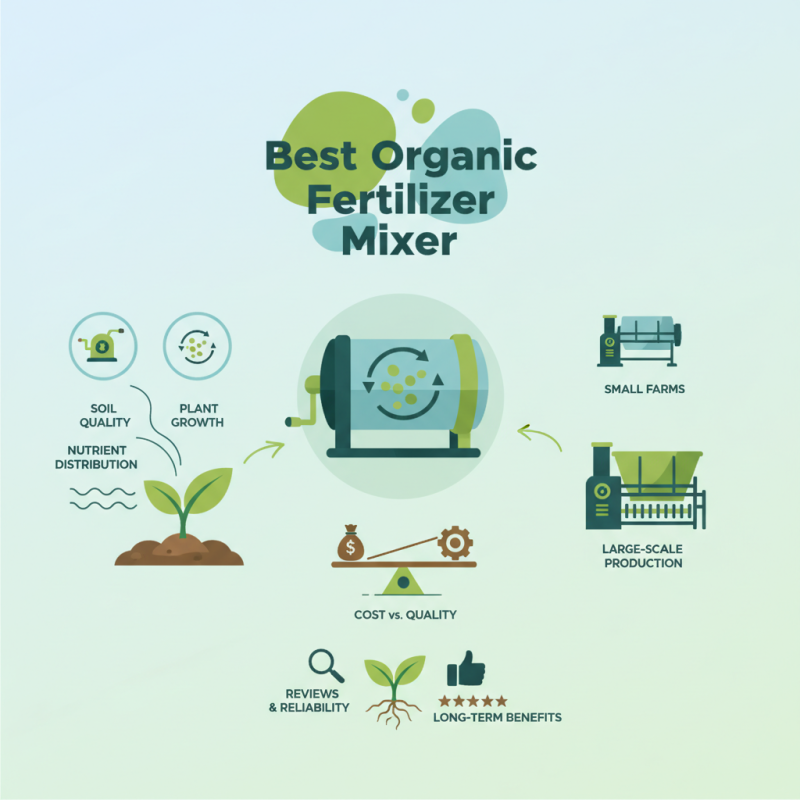
The use of organic fertilizer mixers in agriculture offers numerous advantages for modern farming practices. According to a report by the Food and Agriculture Organization (FAO), the global organic fertilizer market is projected to grow by 15% annually. This trend reflects a shift towards sustainable farming. Mixers facilitate the uniform blending of organic materials, ensuring that nutrients are evenly distributed. As a result, crops receive consistent nourishment, leading to improved yields.
Additionally, organic fertilizers help enhance soil health. They increase microbial activity, which is critical for nutrient cycling. The USDA states that healthy soil can boost crop productivity by up to 30%. However, not all mixers are created equal. Some may struggle with certain organic materials, leading to inconsistent results. Choosing the right mixer, based on specific needs, can significantly affect overall farming efficiency.
Farmers have reported increased productivity and reduced environmental impact using organic fertilizer mixers. While challenges remain, such as the initial investment cost, the benefits often outweigh these drawbacks. As farmers become more aware of these tools, they play a crucial role in fostering sustainable agriculture practices and enhancing food security.
When choosing an organic fertilizer mixer, certain features are crucial for maximizing efficiency and effectiveness. One important aspect is the mixing capacity. A good mixer should handle various batch sizes, catering to different agricultural needs. This flexibility allows farmers to create custom blends suited to their crops. The durability of the materials used in construction also matters. A sturdy design ensures longevity, which is essential for any farmer aiming to invest wisely.
Another feature to consider is the ease of operation. A user-friendly interface can significantly reduce the learning curve for new users. Look for mixers that come with clear instructions and intuitive controls. This can save time and effort, boosting productivity. Additionally, consider the maintenance requirements. A mixer that is easy to clean and maintain helps avoid complications during operation.
Efficiency in mixing is also vital. The ideal mixer should provide uniform blending, which enhances nutrient distribution. However, achieving this takes time and skill. Some users may need to experiment with different settings to find the optimal balance. Reflecting on the feedback can lead to better outcomes, even if initial results seem inconsistent.
When selecting an organic fertilizer mixer, buyers should consider various models and features. A reliable mixer can significantly enhance productivity in organic farming. Many models offer a compact design, ideal for small to medium-sized farms. Others boast large capacities suited for commercial operations.
Key features to look for include durability and ease of use. Some mixers come with adjustable speeds, allowing customization for different materials. A good mixer should also have safety features to prevent accidents. Certain models are designed with user-friendly controls, making operation smoother for all skill levels.
Buyers often face challenges in sourcing the right equipment. Sifting through technical specifications and reviews can be overwhelming. It's essential to understand the specific needs of your operation. Consider how each model fits into your workflow. Potential customers should also reflect on long-term maintenance costs. Investing in the right equipment can pay off over time, but initial costs can be a hurdle for many.
When comparing organic and conventional fertilizer mixers, distinct differences emerge. Organic fertilizer mixers often focus on gentle manipulation of materials. This helps preserve beneficial microbes. These mixers use slower speeds, ensuring a uniform blend without damaging sensitive components.
In contrast, conventional mixers typically operate at higher speeds. This can lead to a quicker mixing process but may degrade the quality of organic materials. Speed often sacrifices nutrient integrity in conventional methods. Understanding this trade-off is crucial for buyers looking for effective solutions.
Potential buyers should also consider the material types they plan to mix. Organic materials can vary significantly in composition. This requires adaptable mixers capable of handling diverse organic inputs. It’s worth noting that some mixers fall short in versatility. Reflecting on these aspects can help buyers make more informed choices.
Maintaining an organic fertilizer mixer is crucial for achieving optimal performance. Regular maintenance prolongs the life of your mixer and ensures efficient operation. According to industry reports, neglecting maintenance can reduce equipment lifespan by up to 30%. Simple practices can prevent costly repairs and downtime.
Keep the mixer clean. Residue buildup can disrupt blending efficiency. After every use, clear away any leftover materials. Regular lubrication of moving parts is also essential. Proper lubrication minimizes friction and wear, extending the equipment's life. Monitoring operational performance is key. If you notice any unusual sounds or vibrations, address them immediately. These could indicate underlying issues requiring repair.
Finally, always check electrical components. Loose connections can lead to malfunction. Regular inspections help catch potential problems early. Surprisingly, many operators overlook this aspect of maintenance. By adhering to these guidelines, you minimize risks and maintain consistent output quality. Consider investing time in proper care; it pays off in durability and performance.
| Feature | Details |
|---|---|
| Mixer Type | Horizontal, Vertical, Batch, Continuous |
| Mixing Capacity | 100 kg, 500 kg, 1000 kg, 2000 kg |
| Power Consumption | 1.5 kW, 3 kW, 5 kW, 10 kW |
| Mixing Time | 5 minutes, 15 minutes, 30 minutes |
| Material Compatibility | Organic matter, Compost, Soil |
| Maintenance Frequency | Monthly, Quarterly, Yearly |
| Lifespan | 5 years, 10 years, 15 years |
| Warranty Period | 1 year, 2 years, 3 years |
: Organic mixers focus on gentle handling to preserve microbes. Conventional mixers operate at higher speeds, risking quality.
Speed affects blending time but can degrade nutrient integrity in organic materials during the mixing process.
Buyers should consider the types of materials they plan to mix and the mixer's adaptability for diverse inputs.
Regular maintenance prevents costly repairs. Neglect can reduce lifespan by up to 30%, highlighting its importance.
It's vital to clean the mixer after every use. Residue can disrupt blending efficiency, affecting output quality.
Proper lubrication minimizes friction and wear on moving parts, extending the equipment's life significantly.
Unusual sounds or vibrations can signal underlying problems. It's essential to address these immediately.
Loose connections in electrical components can cause malfunctions. Regular inspections help identify issues early.
Neglect can lead to reduced efficiency and shorter equipment lifespan. Simple maintenance can prevent these issues.
Absolutely. Proper care improves durability and performance, ultimately leading to better results and less downtime.
The article "Best Organic Fertilizer Mixer for Global Buyers to Consider?" explores the significance of using Organic Fertilizer Mixers in modern agriculture. It highlights the numerous benefits these mixers provide, such as enhancing nutrient distribution and promoting sustainable farming practices. Key features to look for in an Organic Fertilizer Mixer include durability, capacity, and ease of use, which are essential for efficient operation.
Furthermore, the article presents a comparative analysis between organic and conventional fertilizer mixers, emphasizing the environmental advantages of organic options. It also offers maintenance tips to maximize the lifespan of your mixer, ensuring that farmers can maintain optimal performance over time. Overall, this article serves as a comprehensive guide for global buyers looking to invest in Organic Fertilizer Mixers, enabling them to make informed decisions that align with sustainable agricultural practices.

Sina Ekato